Why Holistic Care Matters Abroad: A Traveler's Guide

Integrated care, the recognized clinical term for treating physical, emotional, social, and spiritual health as one connected system, defines why holistic care matters abroad more than in any domestic setting. When you cross borders for treatment or recovery, the stakes multiply. Over 80% of the world’s population relies on traditional or integrated medicine, which means most patients worldwide already expect care that goes beyond a prescription. For travelers, that expectation becomes a practical necessity. Fragmented care in an unfamiliar country does not just feel uncomfortable. It produces worse outcomes, higher costs, and longer recovery times.
Why holistic care matters abroad: the core components
Integrated care abroad is not a philosophy. It is a clinical framework built from four measurable dimensions: physical treatment, emotional support, social context, and continuity of patient history. Each dimension becomes harder to maintain when you leave your home country, which is exactly why each one demands deliberate attention.
The physical dimension covers more than the procedure itself. It includes pre-treatment assessment, the treatment plan, and structured aftercare. Successful medical travelers consistently prioritize all-inclusive recovery programs over the surgery alone, including meals, rehabilitation, and logistical support. That pattern reflects a hard truth: recovery happens after the operating room, not inside it.

The emotional dimension is equally concrete. Patients recovering abroad face language barriers, unfamiliar food, and social isolation. These stressors directly affect healing speed and medication adherence. A provider that ignores psychological support is not delivering complete care.
The social dimension addresses your support network. Social engagement abroad is critical for mental health and overall well-being, especially during recovery. Patients without a local support system need providers who build that structure into the care plan.
Continuity ties all three dimensions together. A physician who knows your full medical history makes better decisions than one reading a summary for the first time. Continuity with a familiar physician reduces unnecessary escalations and improves outcomes in new locations. That single factor separates integrated care from episodic treatment.
Pro Tip: Before you travel, compile a single document with your full medication list, allergy history, and recent lab results. Share it digitally with every provider you see abroad. This one step preserves continuity even when your GP is thousands of miles away.
How does integrated care improve health outcomes overseas?
The evidence for integrated approaches is direct and measurable. Integrative healthcare models reduce polypharmacy, improve patient adherence, and produce higher satisfaction scores compared to conventional treatment alone. Polypharmacy, the use of five or more medications simultaneously, is a particular risk for travelers managing chronic conditions across different health systems. Reducing it lowers the chance of dangerous drug interactions in settings where your records may be incomplete.
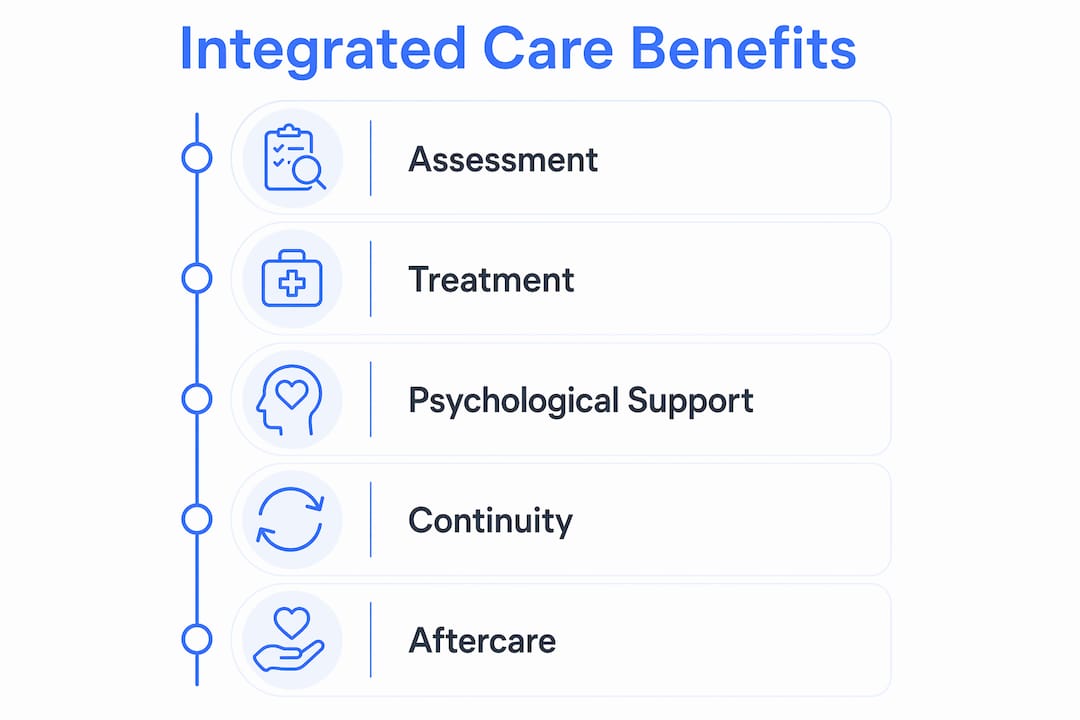
Patient adherence is the second major gain. When care addresses emotional and social factors alongside physical ones, patients follow their treatment plans more consistently. That consistency matters most during the recovery phase abroad, when no one is checking in daily.
| Outcome | Conventional care | Integrated care |
|---|---|---|
| Medication adherence | Lower, especially post-discharge | Higher due to psychological support |
| Patient satisfaction | Variable, often lower abroad | Consistently higher with personalized plans |
| Chronic condition management | Reactive, episodic | Proactive, continuous |
| Risk of unnecessary escalation | Higher without history access | Lower with continuity of care |
“Continuity of care, not just access, is vital for safe travel health. Aligned, longitudinal treatment plans prevent the gaps that turn minor complications into serious ones.” — WorldClinic, 2026
The chronic condition angle deserves specific attention. Travelers managing diabetes, cardiovascular disease, or autoimmune conditions face compounding risks abroad. An integrated provider tracks these conditions within the broader treatment plan rather than treating them as separate problems. That coordination prevents the kind of fragmented care that leads to avoidable hospital readmissions.
What practical challenges does integrated care help travelers avoid?
The financial exposure of getting sick abroad without proper coverage is severe. ICU care in Thailand costs $5,000–$15,000 per week. Medical evacuation ranges from $50,000 to $200,000. Those numbers represent the worst-case scenario of fragmented care: a patient without a coordinated plan who ends up in emergency services rather than a managed recovery setting.
Insurance gaps create a second layer of risk. A registration gap of 1–6 weeks in public health access is common after arriving abroad. During that window, patients have no coverage fallback. Integrated care providers address this directly by helping patients secure short-term private coverage before the gap becomes a crisis.
The most common practical challenges integrated care resolves include:
- Language barriers in clinical settings. Miscommunication about symptoms or medication dosages causes preventable errors. Providers with multilingual staff or translation support eliminate this risk.
- Insurance coverage confusion. Many international plans exclude pre-existing conditions and elective procedures. Verifying direct billing and 24/7 English-speaking support before travel prevents financial shocks mid-treatment.
- Fragmented aftercare. Patients discharged from a foreign hospital without a structured follow-up plan face the highest complication rates. Integrated aftercare programs close this gap with scheduled check-ins, rehabilitation access, and logistical support.
- Emotional isolation during recovery. Recovering alone in a foreign country without social support slows healing. Providers who build support structures into the care plan address this directly.
Pro Tip: Always verify whether your insurance plan offers direct billing with the specific clinic you are using. Paying out of pocket and seeking reimbursement later is slower, more stressful, and sometimes unsuccessful for large claims.
Understanding the hidden costs of treatment abroad before you commit to a provider is one of the most protective steps you can take.
How to choose and access integrated care services while traveling
Selecting the right provider abroad requires evaluating specific criteria, not just price or location. The following checklist separates providers who deliver genuine integrated care from those who use the term loosely.
- Confirm aftercare is included in the package. Ask specifically what happens after your procedure. Meals, rehabilitation, follow-up appointments, and logistical support should be listed explicitly, not implied.
- Verify 24/7 English-speaking support. Medical questions do not follow business hours. A provider without round-the-clock access in your language is not equipped for international patients.
- Check direct billing arrangements. Direct billing means the provider settles costs with your insurer directly. This removes the financial and administrative burden from you during recovery.
- Assess telemedicine options for follow-up. Post-treatment follow-up via telemedicine preserves continuity after you return home. Providers who offer this demonstrate a commitment to longitudinal care, not just the procedure.
- Review psychological support provisions. Ask whether the package includes access to counseling or mental health support. This is the dimension most providers omit and most patients need.
- Evaluate cultural sensitivity. A provider experienced with international patients understands dietary restrictions, communication preferences, and recovery expectations that differ across cultures.
Medical tourism packages that bundle these elements into a single plan consistently produce better outcomes than those that treat each element as an optional add-on. Knowing what to look for in a reliable medical tourism provider before you sign anything is the single most protective step you can take.
International patients increasingly value trust, empathy, and personalized support over technology. That preference reflects a deeper truth: the quality of the human relationship between patient and provider predicts outcomes as reliably as the quality of the equipment.
Key Takeaways
Integrated care abroad produces better outcomes because it treats physical recovery, emotional well-being, and logistical continuity as one connected system, not three separate problems.
| Point | Details |
|---|---|
| Continuity of care reduces risk | A physician with your full history makes fewer errors and avoids unnecessary escalations. |
| Insurance gaps are predictable | A 1–6 week registration gap is common abroad; short-term private coverage closes it before it becomes a crisis. |
| Aftercare determines recovery speed | All-inclusive programs with meals, rehab, and follow-up outperform surgery-only packages on every outcome measure. |
| Social support is clinical, not optional | Building a support network abroad directly improves mental health and treatment adherence. |
| Provider selection criteria matter | Direct billing, 24/7 support, and telemedicine follow-up separate genuine integrated care from marketing language. |
What I have learned from watching travelers choose care abroad
I have watched patients make the same mistake repeatedly. They research the procedure obsessively and ignore everything around it. They compare surgical techniques, surgeon credentials, and clinic ratings. Then they arrive in a foreign country with no aftercare plan, no insurance clarity, and no support structure. The procedure goes well. The recovery does not.
The importance of integrated care overseas is not abstract. It shows up in the patient who cannot reach anyone at 2 a.m. when their wound looks wrong. It shows up in the traveler who discovers their insurer does not cover the rehabilitation they need. It shows up in the person who recovers physically but returns home emotionally depleted because no one addressed the psychological weight of healing alone in an unfamiliar place.
The providers who get this right share one characteristic: they treat the patient’s entire situation, not just the diagnosis. They ask about your support network. They confirm your insurance covers what you think it covers. They build follow-up into the plan before you leave, not after a complication forces the conversation.
My honest view is that the benefits of integrated health internationally are not a premium feature. They are the baseline standard that every international patient deserves. Travelers who demand this standard from their providers recover faster, spend less on complications, and return home with a genuinely positive experience. Those who settle for episodic, fragmented care take on risks that are entirely avoidable.
— Saher
Theratravel’s approach to integrated care for international patients
Theratravel was built specifically for patients who need more than a referral abroad. The model addresses the full picture: treatment access, cost transparency, aftercare coordination, and the logistical support that determines whether recovery is stressful or straightforward.

Patients traveling with Theratravel receive personalized treatment plans, travel arrangements, and structured aftercare as part of a single package. Theratravel’s clinics are selected for their experience with international patients and their capacity to deliver care that addresses physical, emotional, and logistical needs together. Costs run up to 60% below UK prices, which removes the financial pressure that forces many patients into fragmented, lower-quality alternatives. You can request a treatment quote directly or browse partner clinics to find a facility matched to your specific procedure and recovery needs.
FAQ
What does integrated care abroad actually include?
Integrated care abroad covers physical treatment, psychological support, logistical assistance, and structured aftercare as a connected plan. It goes beyond the procedure to address every factor that affects recovery in a foreign setting.
Why is continuity of care so important when traveling for treatment?
A physician familiar with your full medical history makes better decisions and avoids unnecessary escalations. Continuity of care is the single most protective factor for patients moving between health systems.
How do I avoid insurance gaps when seeking care abroad?
A registration gap of 1–6 weeks in public health access is common after arriving in a new country. Securing short-term private coverage before that gap opens prevents dangerous lapses in care access.
What should I look for in a medical travel package?
Prioritize packages that include direct billing, 24/7 English-speaking support, aftercare programs, and telemedicine follow-up. These elements distinguish genuinely integrated care from a basic surgical referral.
Does psychological support matter during medical travel?
Yes. Social isolation and emotional stress during overseas recovery directly reduce treatment adherence and slow healing. Providers who include psychological support in their care plans produce measurably better patient outcomes.
Recommended
- How to Choose a Reliable Medical Tourism Provider | Your Step-by-Step Guide
- Hidden Costs of Back Surgery Abroad: What to Look for in Your Quote | Thera Travel
- Common Inclusions in Medical Tourism Packages: 2026 Guide
- Best Country for Orthopaedic Surgery Abroad: UK Patient’s Guide (2026) | Thera Travel
Related posts

Benefits of Coordinated Travel and Surgery Packages

Why Families Research Healthcare Abroad in 2026