


How Patients Access Surgery Abroad: 2026 Guide

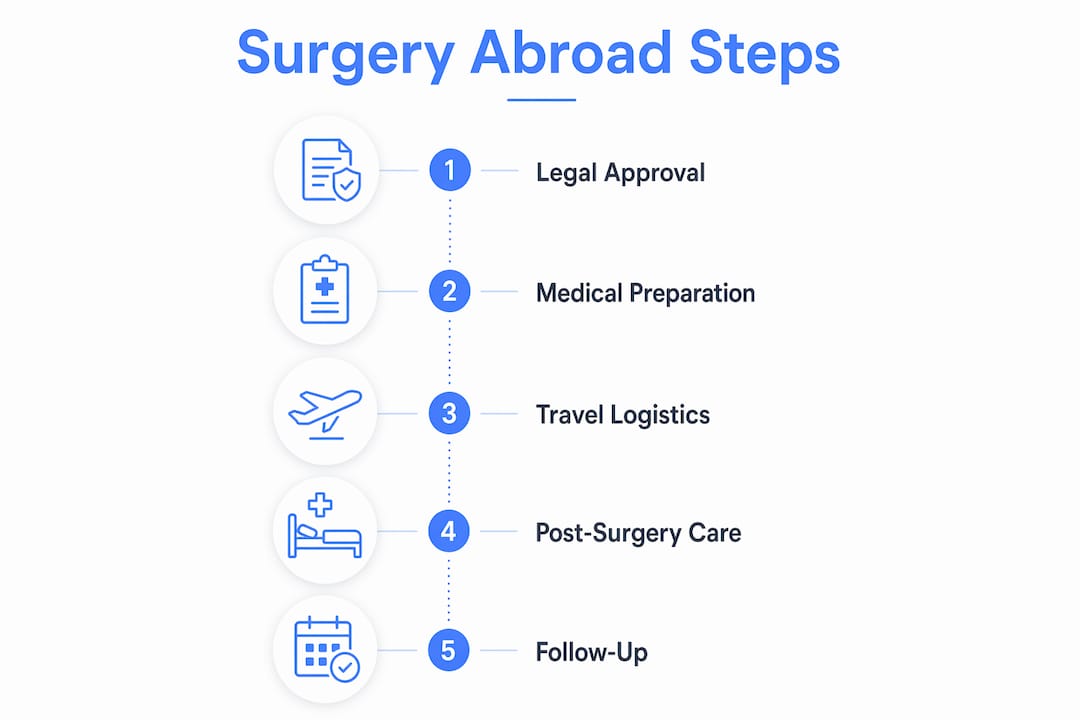
Accessing surgery abroad is defined as the process of traveling to another country to receive a planned surgical procedure, typically to reduce costs or avoid long waiting times at home. The industry term for this practice is medical tourism, and it covers everything from orthopedic procedures to cardiac surgery. How patients access surgery abroad involves three parallel tracks: legal authorization, medical preparation, and logistical coordination. The EU’s planned healthcare framework gives EU citizens a legal right to organize treatment in another member state, with options for direct coverage or reimbursement. Theratravel helps patients navigate all three tracks with personalized packages that cut UK prices by up to 60%.
How do patients access surgery abroad legally and safely?
The legal foundation for international surgery access depends on where you live and where you plan to be treated. EU citizens have a formal pathway that includes prior authorization for certain procedures and reimbursement rights through their home country’s public health system. UK patients traveling post-Brexit operate under different rules and rely more heavily on private insurance and self-funding arrangements.

Understanding the EU S2 form and prior authorization
The EU planned healthcare framework requires prior authorization for any treatment involving an overnight hospital stay or expensive medical equipment. Without that authorization, reimbursement is not guaranteed. Reimbursement is also capped at the rate your home country’s public system would pay for the same procedure. That ceiling matters because surgical costs vary widely across Europe, and the gap between what you pay abroad and what your home system reimburses can be significant.
For UK patients, the S2 route is no longer automatically available. Most patients traveling for medical treatment from the UK now self-fund or use private health insurance. Knowing which route applies to you before you book is not optional. It determines your financial exposure if something goes wrong.
Insurance requirements for surgery abroad
Standard travel insurance almost always excludes complications arising from planned medical procedures. That exclusion is buried in the fine print, and patients discover it only after a complication occurs. Specialized medical travel insurance covers the procedure itself, post-operative complications, and emergency repatriation. Some private insurers have formal partnerships with international hospitals, which means claims are processed directly rather than reimbursed after the fact.
Pro Tip: Before purchasing any insurance policy, ask the insurer directly whether complications from a pre-planned surgical procedure are covered. Get the answer in writing.
The risks of traveling without adequate coverage are concrete. Revision surgery at home, without documentation from the original surgeon, can cost thousands of pounds or dollars out of pocket. Hidden aftercare costs are one of the most common financial shocks patients face after surgery abroad.
- Confirm your insurance covers pre-planned surgical complications, not just accidents
- Check whether your insurer has a direct billing arrangement with your chosen clinic
- Carry proof of coverage in both digital and printed form
- Understand the repatriation clause, including what medical conditions trigger it
How should patients prepare medically before traveling for surgery?
Medical preparation is the step most patients underestimate. Booking a flight and a clinic is straightforward. Confirming that your body is ready for surgery, travel, and recovery is a different process entirely.
A pre-travel health check at least 6 weeks before departure is the standard recommendation. That window gives your doctor time to identify conditions that could complicate surgery or anesthesia, adjust medications, and provide a fitness-to-travel letter. It also gives you time to act on any findings before your procedure date.
Here is the preparation sequence that reduces risk most effectively:
- Schedule a pre-travel health check at least 6 weeks out. Your local doctor reviews your current medications, blood pressure, cardiac history, and any conditions that affect anesthesia or wound healing.
- Compile a complete medical record package. This includes recent blood work, imaging, a current medication list with dosages, allergy documentation, and any specialist letters relevant to your procedure.
- Discuss deep vein thrombosis prevention with your surgeon. Long-haul flights after surgery significantly raise DVT risk. Your surgical team should prescribe compression stockings and, where appropriate, anticoagulant medication for the return journey.
- Confirm informed consent procedures with the foreign clinic. Informed consent abroad requires a thorough explanation of the procedure, its risks, and alternatives. Language barriers can compromise this process. Request translated consent documents in advance.
- Consult your home surgeon before booking. A surgeon at home can establish a realistic recovery timeline and flag follow-up costs that belong in your budget. Consulting a surgeon before booking prevents the common mistake of scheduling a return flight too early.
Pro Tip: Carry your full medication list in your carry-on bag, not your checked luggage. If your bags are delayed, you need your medications and dosage instructions immediately available.
The coordination between your local doctor and the foreign surgical team is not a formality. It is the mechanism that catches contraindications, aligns post-operative care, and gives both teams the information they need to treat you safely. Patients who skip this step face the highest rate of preventable complications.
What logistical steps are essential for planning surgery abroad?
Logistics determine whether your medical trip runs smoothly or becomes a crisis. The planning framework covers four areas: travel booking, documentation, communication, and recovery duration.
Booking travel around your medical schedule
Book flights and accommodation only after your procedure date is confirmed in writing by the clinic. Booking in reverse order, where you secure flights first and then find a clinic, creates pressure to rush the medical decision. Your accommodation should be within easy reach of the clinic, ideally within 15–20 minutes, to reduce strain on your first post-operative days.
Recovery duration should not be rushed even when you feel well. Bodily healing continues beyond subjective wellness. Build at least two to three additional days into your stay beyond the surgeon’s minimum recommendation. That buffer accommodates follow-up tests, wound checks, and medical clearance before flying.
Building your travel day pouch
A travel day pouch is a carry-on bag containing everything you need if your checked luggage is lost or delayed. Pack it before you leave home and do not check it.
| Item category | What to include |
|---|---|
| Identity and travel documents | Passport, visa, travel insurance policy, clinic confirmation letter |
| Medical documents | Medication list, allergy record, pre-operative test results, consent forms |
| Medications | Full supply plus 3–5 buffer days, in original labeled packaging |
| Communication tools | Clinic phone number, emergency contact list, phone charger |
| Recovery basics | Compression stockings, wound dressings if prescribed, basic hygiene items |
Pro Tip: Save your clinic’s address and emergency contact number as a screenshot on your phone. If you lose data connectivity abroad, you still have the information offline.
Patients seeking surgery abroad also need to prepare for language barriers at the local level. Carry a printed card with your procedure name, your surgeon’s name, your blood type, and your known allergies translated into the local language. This card is useful in any emergency room encounter.
How do patients manage post-surgery care after returning home?
Post-operative care is where the most expensive and preventable problems occur. The surgical team abroad performs the procedure. Your local healthcare system manages what comes after. Those two systems do not automatically communicate.
Complications after surgery abroad are frequently linked to premature return flights and inadequate aftercare planning. BAAPS, the British Association of Aesthetic Plastic Surgeons, has documented this pattern repeatedly. Flying too soon after surgery raises infection risk, disrupts wound healing, and dramatically increases DVT probability. Your return flight date should be approved by your surgeon, not set by your original booking.
- Request a full operative report from your surgical team before you leave the clinic
- Ask for discharge instructions in English, including wound care, medication schedules, and red-flag symptoms
- Share the operative report with your local doctor within 48 hours of returning home
- Know which symptoms require immediate local emergency care versus a scheduled follow-up
Revision surgery without proper operative documentation is one of the costliest outcomes in medical tourism. Local surgeons cannot safely revise a procedure they have no record of. The operative report, implant specifications if relevant, and post-operative imaging are not optional documents. They are the foundation of any future care.
Pro Tip: Ask your foreign clinic to email you a digital copy of your operative report before discharge. Do not rely on receiving it by post after you return home.
For patients who had orthopedic procedures, the post-surgery travel risks specific to knee and hip surgery deserve separate attention. Mobility restrictions, swelling, and DVT risk interact with air travel in ways that require specific planning beyond general post-operative advice.
Key takeaways
Patients who access surgery abroad successfully treat legal authorization, medical preparation, and logistical coordination as equally critical, not sequential, tasks.
| Point | Details |
|---|---|
| Secure authorization before booking | EU patients need prior authorization for overnight procedures; UK patients must confirm self-funding or private insurance coverage first. |
| Get specialized travel insurance | Standard travel insurance excludes planned surgical complications; specialized medical travel insurance is the only adequate coverage. |
| Complete a pre-travel health check | Schedule a medical review at least 6 weeks before departure to confirm fitness and align medications with the surgical team. |
| Pack a travel day pouch | Carry all documents, medications, and clinic contacts in your carry-on bag to protect continuity of care if luggage is delayed. |
| Obtain your operative report before leaving | Your local doctor cannot manage follow-up care or revisions without a full surgical record from the treating clinic. |
What I’ve learned from watching patients plan surgery abroad
Most patients who run into serious problems abroad did not make one big mistake. They made five small ones that compounded. They booked flights before confirming their procedure date. They assumed their travel insurance covered surgical complications. They skipped the pre-travel health check because they felt fine. They flew home two days after surgery because work was waiting. And they left the clinic without a written operative report.
The patients who do well share a different pattern. They treat the legal, medical, and logistical preparation as a single integrated process, not three separate checklists. They ask hard questions of their insurer and their clinic before committing money. They build recovery time into their schedule as a non-negotiable, not a preference.
The EU’s planned healthcare framework is genuinely useful for eligible patients, but it is also genuinely complex. Reimbursement ceilings, prior authorization conditions, and the gap between what you pay and what your home system refunds can all create financial surprises. Patients who read the framework carefully before they travel avoid most of those surprises.
My strongest advice is this: use a facilitator who has already solved the coordination problem. Not because you cannot do it yourself, but because the value of a good facilitator is not the booking. It is the institutional knowledge of which clinics have strong aftercare protocols, which insurance arrangements actually pay out, and which recovery timelines are realistic for your specific procedure. That knowledge takes years to build. Borrowing it costs far less than learning it the hard way.
— Saher
Theratravel makes accessing surgery abroad straightforward
Patients who want high-quality surgery without NHS waiting times have a clear option. Theratravel provides all-inclusive packages that cover treatment planning, travel coordination, clinic access, and aftercare support, at costs up to 60% lower than UK prices.

Theratravel works with premium vetted clinics and experienced specialists across Europe. Patients receive personalized treatment plans, not generic packages. The process starts with a medical procedure quote that gives you a clear picture of costs, timelines, and what is included before you commit to anything. For patients considering orthopedic surgery specifically, Theratravel’s orthopedic surgery options cover knee, hip, and spinal procedures with full coordination support from first inquiry to post-operative follow-up.
FAQ
What is the S2 form for surgery abroad?
The S2 form is an EU authorization document that allows patients to receive planned medical treatment in another EU member state with costs covered or reimbursed by their home country’s public health system. Prior authorization is required for procedures involving overnight stays or expensive equipment.
Does standard travel insurance cover surgery abroad complications?
Standard travel insurance typically excludes complications from pre-planned surgical procedures. Patients need specialized medical travel insurance that explicitly covers the procedure, post-operative complications, and emergency repatriation.
How long should patients stay abroad after surgery?
Patients should stay for the full recovery period recommended by their surgeon, plus a buffer of two to three additional days for follow-up tests and medical clearance before flying. Returning too early raises the risk of infection, poor wound healing, and deep vein thrombosis.
What documents should patients bring home after surgery abroad?
Patients should carry a full operative report, discharge instructions in English, medication schedules, and any imaging or implant specifications. These documents are required for local follow-up care and any future revision surgery.
How do patients fund surgery abroad without EU authorization?
UK patients and others outside the EU authorization framework typically self-fund or use private health insurance. A self-fund surgery guide that accounts for the procedure cost, travel, accommodation, insurance, and potential aftercare expenses at home gives the most accurate picture of total cost.
Recommended
Related posts

Benefits of Coordinated Travel and Surgery Packages

Why Families Research Healthcare Abroad in 2026
