


How to Book an All-Inclusive Surgery Trip Abroad

Booking an all-inclusive surgery trip abroad means securing a single package that covers your surgical procedure, hospital stay, accommodation, local transfers, and coordination support. Patients can access high-quality surgical care at 50–70% lower prices than domestic rates, making overseas surgery packages a practical solution for anyone stuck on NHS waiting lists. The industry term for this practice is medical tourism, and the all-inclusive model is its most patient-friendly format. Theratravel specializes in exactly this approach, offering packages built around individual patient needs rather than generic itineraries.
What does an all-inclusive surgery package typically include?
An all-inclusive surgery package bundles the core medical and logistical components of your trip into one price. Understanding what is and is not covered prevents budget surprises on arrival.
Standard inclusions across most packages:
- Surgeon fees, anesthesia, and operating theater costs
- Hospital or clinic stay for the required number of nights
- Hotel or recovery house accommodation after discharge
- Airport pickup and local transfers between your accommodation and clinic
- Bilingual coordinator or patient liaison throughout your stay
- Pre-op consultations and basic post-op follow-up appointments
What packages typically do not cover:
- International flights to and from your destination
- Travel insurance or medical evacuation coverage
- Extensive post-op nursing care beyond the first day or two
- Meals outside of the hospital stay
- Personal spending, tips, or excursions
Clinics negotiate discounted hotel and transport rates for bundled packages, which is why booking through a coordinated package often costs less than arranging each component separately. That bulk-buying power is a genuine financial advantage, not just a marketing claim.
Pro Tip: Ask every provider to send you a written itemized breakdown of what the package price includes. A reputable clinic or agency will provide this without hesitation. If they resist, treat that as a warning sign.
For a full breakdown of what medical tourism packages typically cover, the common inclusions guide from Theratravel is a useful reference.
All-inclusive surgery packages vs. self-arranged trips: which saves more?
The honest answer is that it depends on your destination, timing, and how much you value your own time. Both approaches have real financial and practical trade-offs.
Medical tourism agencies often charge 15–30% commission, which can add £800 to £2,500 or more to your total cost compared to booking directly with a clinic. That markup is the central argument for the DIY approach. However, most patients spend 10–20 hours arranging surgery trips independently. That time has real monetary value, and most patients underestimate it when running their cost comparisons.
A true value comparison of packages versus self-arranged trips must include flights, transfers, meals, and the time saved from managing multiple bookings. When you factor in all those variables, the gap between the two approaches narrows considerably.
| Factor | All-inclusive package | Self-arranged trip |
|---|---|---|
| Upfront cost | Higher per-line item | Lower if booked early |
| Time investment | Low (1–3 hours) | High (10–20 hours) |
| Flight flexibility | Limited or excluded | Full control |
| Hidden cost risk | Lower with itemized quote | Higher without experience |
| On-the-ground support | Included | Self-managed |
| Best for | Fixed schedules, first-time patients | Experienced travelers, flexible dates |
A hybrid approach works well for many patients. Book your international flights independently for maximum flexibility and price control, then use a local coordinator or clinic package for transfers, accommodation, and post-op support. This captures the convenience of a package while avoiding the full agency markup.
Pro Tip: When comparing costs, build a spreadsheet that lists every line item: flights, hotel, transfers, meals, translation, and your hourly rate for research time. The total often surprises people who assumed DIY was always cheaper.
To compare international surgery costs in detail, the international surgery cost guide walks through the financial variables by destination.
How to book an all-inclusive surgery trip abroad: step by step
A well-planned overseas surgery package follows a clear sequence. Skipping steps early creates problems later.
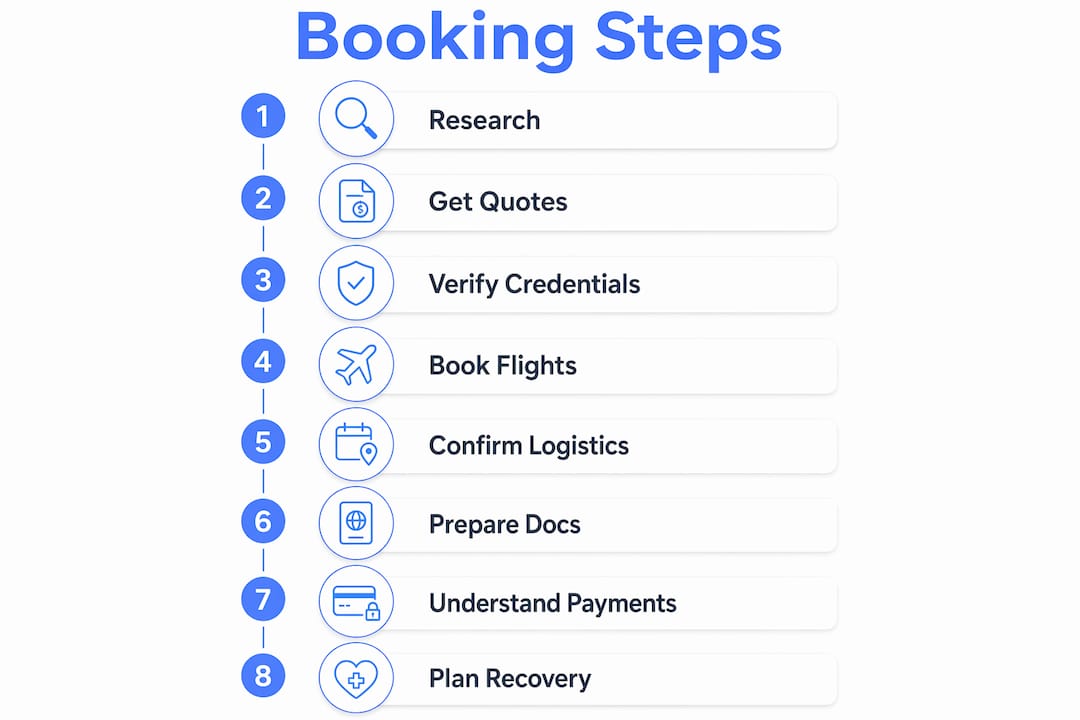
1. Research accredited hospitals and clinics
Start with facilities that hold Joint Commission International (JCI) accreditation or equivalent national certification. JCI is the gold standard for international patient safety. Clinics with dedicated international patient departments handle the logistics of overseas surgery regularly and are better equipped to support you.
2. Request itemized quotes from multiple providers
Contact at least three clinics or agencies directly. Ask each one to send a written quote that lists every included service. Package details vary widely between providers, and a lower headline price often means fewer inclusions. Direct communication with the clinic also gives you the clearest picture of surgeon qualifications and facility standards.

3. Verify surgeon credentials and hospital accreditation
Check that your surgeon holds board certification in the relevant specialty and has documented experience with your specific procedure. Ask for before-and-after case examples where appropriate. Confirm the hospital’s accreditation status through the accrediting body’s official website rather than relying on the clinic’s own marketing materials.
4. Book your international flights separately
Most all-inclusive surgery packages do not include international flights. Book these independently so you control your travel dates and can adjust if your surgery date shifts. Use flexible fare options where possible, particularly for the return leg, since recovery timelines can change.
5. Confirm package logistics in writing
Before paying any deposit, get written confirmation of your surgery date, accommodation address, pickup arrangements, and the name of your bilingual coordinator. Confirm that 24/7 support is available during your stay. Verbal assurances are not enough.
6. Prepare your documentation
Gather your passport, any required entry visas, full medical records relevant to your procedure, a letter from your GP if applicable, and proof of travel insurance. Some destinations require specific health documentation for surgical patients. Check entry requirements at least eight weeks before travel.
7. Understand payment terms
Most packages require a deposit to secure your booking, with the balance due on arrival or before surgery. Get the payment schedule in writing. Understand the refund policy for cancellations caused by medical reasons on either side.
8. Plan your post-op recovery
Recovery after surgery abroad is often comfortable in hotel or recovery house settings, sometimes with private nursing care included. Confirm exactly what post-op support your package provides before you travel. Arrange for a trusted person to accompany you or be reachable by phone throughout your recovery period.
Pro Tip: Build at least two extra recovery days into your return travel plan. Surgeons abroad routinely clear patients to fly earlier than is actually comfortable. Extra time costs little and protects your recovery.
Common mistakes patients make when booking surgery abroad
The most expensive mistakes in medical tourism happen before the patient boards a plane.
The most frequent errors:
- Not reading the package contract in full. Hidden costs including currency fluctuation charges, tips, extra meals, and post-op add-ons appear regularly in patient complaints. Read every line before signing.
- Booking inflexible flights too early. Locking in non-refundable flights before your surgery date is confirmed raises your financial risk significantly. Confirm the surgery date first.
- Skipping independent accreditation checks. A clinic’s website is not a substitute for verifying JCI or national accreditation status through official channels.
- Underestimating recovery time. Patients frequently book return flights too soon after surgery. Complications, swelling, or restricted mobility can make early travel genuinely dangerous.
- Relying solely on agency research. Agencies earn commission from the clinics they recommend. Independent research through patient forums, medical tourism review platforms, and direct clinic contact gives a more balanced picture.
- Ignoring travel insurance that covers medical tourism. Standard travel insurance policies exclude medical procedures. You need a policy that explicitly covers surgical complications, medical evacuation, and trip cancellation due to health reasons.
“The single most common regret I hear from patients who had problems abroad is that they didn’t ask enough questions before they left. Every question you ask before booking is a problem you prevent during recovery.”
For a detailed look at the hidden costs in surgery quotes, Theratravel’s guide covers the line items most patients miss.
Key Takeaways
Patients who book an all-inclusive surgery trip abroad save the most money and avoid the most stress when they verify accreditation, read package contracts in full, and plan recovery time conservatively.
| Point | Details |
|---|---|
| Packages bundle core services | Surgery, accommodation, and transfers are typically included; flights and insurance are not. |
| Agency commissions add real cost | Agencies can add 15–30% to your total; direct clinic booking reduces this markup. |
| DIY requires significant time | Self-arranged trips take 10–20 hours of planning; packages trade markup for convenience. |
| Accreditation is non-negotiable | JCI certification is the international benchmark for patient safety at overseas facilities. |
| Recovery time is routinely underestimated | Build extra days into your return travel plan to protect your health and reduce complications. |
What I’ve learned from watching patients book surgery abroad
Patients come to me after months on NHS waiting lists, and the anxiety they carry is real. The fear is not just about the surgery. It is about being far from home, in an unfamiliar system, without the safety net they are used to. That fear is legitimate, and no amount of cost savings makes it disappear on its own.
What I have observed consistently is that the patients who have the best experiences are not the ones who found the cheapest package. They are the ones who asked the most questions before they committed. They pushed back on vague package descriptions. They asked to speak directly with their surgeon before traveling. They confirmed their coordinator’s availability at 11 PM on a Sunday, not just during business hours.
The bilingual coordinator role is undervalued in most package comparisons. When you are post-op, disoriented, and trying to communicate a concern to a nurse in a foreign language, having a dedicated coordinator who answers immediately is worth more than any discount. Patients who access surgery abroad through well-structured packages consistently report better experiences than those who piece together their own arrangements without local support.
My honest recommendation: treat the package contract like a legal document, because it is one. Read it with the same attention you would give a mortgage offer. The patients who do this rarely have serious problems. The ones who skim it and assume everything is covered are the ones who call with complaints.
— Saher
Theratravel’s all-inclusive surgery packages for NHS patients
NHS waiting lists are pushing patients toward overseas surgery options, and the gap between waiting and receiving care has real consequences for health and quality of life.

Theratravel works with a network of accredited international clinics to give patients access to surgical care at up to 60% less than UK prices, with packages that include accommodation, transfers, and bilingual coordination. Every package is built around the individual patient, not a generic itinerary. Patients receive a personalized treatment plan, full pre-travel support, and aftercare coordination from a dedicated team. To find out what your procedure would cost with a full package, you can request a tailored quote directly through Theratravel and receive a detailed breakdown with no obligation.
FAQ
What does an all-inclusive surgery package abroad include?
Most packages cover surgery fees, anesthesia, hospital stay, accommodation, and local transfers. International flights and travel insurance are typically not included.
How much can I save by booking surgery abroad?
Patients can access surgical care at 50–70% lower prices than domestic rates, depending on the destination and procedure type.
Is it safer to book through an agency or directly with a clinic?
Booking directly with an accredited clinic reduces agency commission costs of 15–30% and gives you clearer communication with your surgical team. Verify JCI accreditation independently regardless of how you book.
How long does it take to arrange a surgery trip independently?
Most patients spend 10–20 hours planning a self-arranged surgery trip. All-inclusive packages reduce this significantly but typically include a markup fee.
What travel insurance do I need for surgery abroad?
You need a policy that explicitly covers surgical procedures, medical complications, and medical evacuation. Standard travel insurance policies exclude planned medical procedures.
Recommended
Related posts

Role of Accredited Overseas Hospitals: 2026 Patient Guide

How Families Navigate Overseas Surgery: 2026 Guide
